Shopping for a $1M to $1.5M home in Edina or around Lake Minnetonka? You are likely brushing up against jumbo financing, where rules and timelines can look different from what you might remember. That can feel confusing when you are trying to make a confident offer.
In this guide, you will learn how lenders define jumbo loans in Hennepin County, what they expect from buyers, and how lakefront and luxury appraisals can affect value and timing. You will also get a simple plan to prepare before you write an offer. Let’s dive in.
Jumbo basics in Hennepin County
A loan is considered “conforming” when it falls at or below the annual limit set by the Federal Housing Finance Agency. Loans above that limit are typically called jumbo or nonconforming and are underwritten with different rules.
Why this matters to you: if your loan amount is above the conforming limit for Hennepin County, you move into jumbo underwriting. That can change the required down payment, reserves, documentation, and pricing.
Use simple math to see where you might land. Example only:
- Purchase price: $1,200,000
- Down payment at 20%: $240,000
- Loan amount: $960,000
If the current conforming limit is below $960,000, you would need jumbo financing. If it is at or above that amount, you may qualify for conforming or high-balance conventional options. Limits update each year, so verify the current FHFA county table before you shop. FHA and VA limits follow different rules, and FHA is generally not used for $1M-plus purchases.
What jumbo lenders expect
Jumbo programs share common themes, even though each lender sets detailed overlays. Plan for the following.
Down payment and LTV
- Many jumbo lenders want 10% to 20% down for well-qualified buyers. Twenty percent is common if you want the best pricing and fewer overlays.
- Sample numbers for a $1,250,000 purchase:
- 10% down is $125,000, loan about $1,125,000
- 20% down is $250,000, loan about $1,000,000
Credit and income profile
- Strong credit scores are favored, often in the 720 to 760 range or higher depending on the lender.
- Expect full income documentation. W‑2 buyers provide recent pay stubs and tax returns. Self-employed buyers often provide two years of personal and business returns, and sometimes additional cash flow validation.
Debt-to-income ratio
- Many prime jumbo programs cap DTI around 43% to 50% based on your credit and reserves. Some products are stricter.
- Compensating factors, such as higher credit, larger down payment, or significant assets, can help if your DTI is near the top of a lender’s range.
Cash reserves
- Reserves are a major difference with jumbo loans. Plan for 6 to 12 months of principal, interest, taxes, and insurance on the subject home. If you own other properties, lenders may require reserves on those as well.
- Verified bank or brokerage accounts count. Retirement funds can count with a reduction based on the program.
PMI and pricing
- Traditional PMI applies to conforming conventional loans. Jumbo loans usually do not offer standard PMI. Low-down jumbo programs may use higher rates or lender-paid alternatives.
- Jumbo rates can be similar to conforming at times or slightly higher in other markets. Pricing depends on loan size, LTV, credit score, and product type. Get quotes from more than one lender to compare.
Appraisals for Edina and Lake Minnetonka
High-end suburban homes and lake properties can be complex to value. Understanding what appraisers look for will help you plan your timeline and your offer strategy.
Limited comparable sales
At $1M and above, there are fewer recent closed sales in most neighborhoods. Appraisers may reach to nearby areas, use older sales with time adjustments, or rely on trend analysis. Expect longer appraisal timelines and the possibility of conditions or clarifications.
Lot and shoreline value
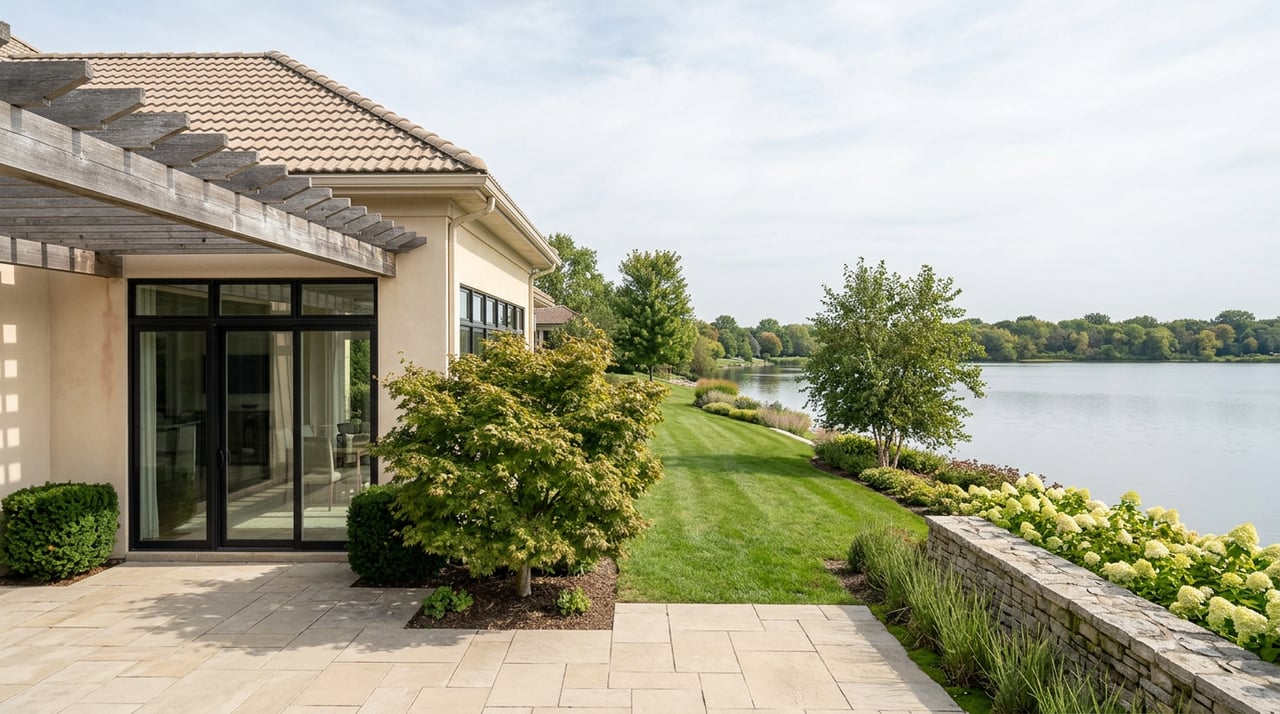
On Lake Minnetonka and nearby lakes, a large portion of value can be in the lot and shoreline. Appraisers measure usable water frontage, dock or access rights, and any easements. Improvements such as docks or seawalls can add value, but condition and permits matter.
Septic, wells, and utilities
Many lake homes use septic systems and private wells. Lenders commonly require septic inspections and well testing. In areas with municipal connections, confirm status and potential hookup costs. Failures or required upgrades can affect value, insurability, and underwriting.
Floodplain and environmental flags
Lakefront parcels can fall inside flood zones. If the property is in a flood hazard area, lenders will require flood insurance. Wetlands, shoreland zoning, and recorded easements can also influence value and loan conditions.
Appraiser selection and turn times
Lenders prefer local appraisers with experience in luxury and waterfront properties. For complex homes, a lender may order a more detailed report or a second appraisal. Build a little extra time into your purchase agreement for this step.
Appraisal gaps and strategies
When appraised value lands below contract price, you have options. You can increase your down payment, ask for seller concessions, or renegotiate. It helps to have reserves and a plan before you write the offer.
Local costs and rules to plan for
Understanding local requirements will help you build a realistic monthly payment and closing budget.
Property taxes and assessments
Your monthly housing payment includes taxes. Pull the parcel’s recent tax history and look for pending special assessments. These can materially change your monthly obligations and your debt-to-income ratio.
Insurance and flood coverage
Lake homes can carry higher homeowner insurance premiums. If the parcel is in a mapped flood zone, flood insurance will be required by the lender. Get quotes early so you are not surprised at closing.
Shoreland rules and permits
Minnesota shoreland management rules regulate setbacks, impervious surfaces, and shoreline work. City or county permits can be required for docks, boathouses, seawalls, and shoreline alterations. These rules can limit future expansion and can influence appraised value.
Municipal differences around the lake
The Lake Minnetonka area includes several jurisdictions, such as Wayzata, Minnetonka, Orono, Shorewood, Excelsior, and Mound. Zoning, septic, and shoreline permitting vary by city. Verify the rules for the specific address.
Financing options for higher-end homes
You have several paths to finance a purchase in the $1M to $1.5M range. The right choice depends on your loan amount, income profile, and timeline.
Conforming or high-balance conventional
If your loan amount fits within the FHFA limit for Hennepin County, you may be able to use a conventional program with standard underwriting. Lower down payments are sometimes available. At higher price points, many buyers still choose larger down payments to improve pricing and remove PMI.
Jumbo conventional loans
These are common for luxury and move-up purchases. Expect stronger credit, reserve, and documentation requirements than conforming loans. Rates vary by lender and market conditions.
Portfolio loans
Some banks hold loans in-house and can be more flexible on unique property types or income situations. These often require larger down payments and pricing that reflects additional risk.
Bank statement or asset-based programs
For self-employed buyers who prefer not to qualify using tax returns, certain lenders offer programs based on bank statements or assets. Terms vary and can carry higher rates or fees.
VA and FHA
FHA limits are usually far below what is needed for $1M-plus purchases. VA loans can work for eligible veterans at higher price points depending on entitlement and lender overlays. Speak with a lender that handles high-balance VA in the Twin Cities to confirm options.
Bridge loans and HELOCs
Move-up buyers often need to carry two homes temporarily. Bridge loans, HELOCs, or sale contingency strategies can help you manage cash flow while you list your current home. Lenders have specific rules for qualifying with a bridge or a carry.
A simple plan to get ready
Use this checklist to prepare before you write an offer in Edina or the Lake Minnetonka area.
Confirm the current FHFA conforming limit for Hennepin County. Decide whether your target price will require jumbo.
Speak with two or three local lenders. Ask about minimum down payment, credit score expectations, max DTI, reserve requirements, and options for self-employed income. Get written quotes so you can compare.
Document your assets. Make sure you can verify liquid reserves that meet lender guidelines. If using retirement accounts for reserves, ask how the lender will count them.
Build a realistic payment. Pull the parcel’s tax history and request homeowner and flood insurance quotes for your target price range.
Check property-specific items early. Confirm flood zone status, shoreland rules, septic and well requirements, and any association fees for docks or shared amenities.
Plan for the appraisal. Anticipate longer timelines for unique or waterfront homes. Discuss potential appraisal gap strategies with your agent and lender.
If you own now, review move-up financing. Explore bridge or HELOC options, and model carry costs so you can choose the cleanest possible offer.
For sellers: vetting buyers and appraisals
If you are selling a higher-end home in Edina or on Lake Minnetonka, strong buyer vetting and a proactive appraisal plan help you avoid delays.
- Request detailed pre-approval that reflects jumbo reserve and income documentation, not a generic letter.
- Prepare an appraisal package. Include recent improvements, permit history, survey or shoreline measurements, dock or access rights, and any septic or well inspections.
- Review tax, assessment, and association documents with your agent so buyers understand the full carrying costs.
- Consider appraisal timelines when you set closing dates, especially for complex or waterfront properties.
When buyers and sellers prepare for jumbo financing realities, transactions tend to move smoothly and close on time.
Ready to make your next move in Edina or around Lake Minnetonka? For lender introductions, appraisal strategy, and a buying or selling plan tailored to your goals, connect with Carrie Sink.
FAQs
What is a jumbo loan in Hennepin County?
- A jumbo loan is any loan amount that exceeds the current FHFA conforming limit for the county, which updates annually and triggers different underwriting.
How much down payment do I need on a $1.2M home?
- Expect 10% to 20% down for most jumbo programs, with 20% common for the best pricing and fewer overlays.
Do jumbo loans require more reserves than conforming?
- Yes, many lenders require 6 to 12 months of principal, interest, taxes, and insurance, and may also require reserves for other properties you own.
Will I pay a higher rate if my loan is just over the conforming limit?
- Often yes, but the difference varies by market and lender; get quotes from more than one lender to compare real-time pricing.
Do lakefront features complicate the appraisal?
- They can, since shoreline, access rights, floodplain status, and infrastructure like docks or septic systems affect value and turn times.
Will I need flood insurance for a Lake Minnetonka home?
- If the parcel is in a mapped flood hazard area, lenders will require flood insurance; verify the specific property’s flood zone early.